
Glass Without Quarrying: the Silica Paolina Kühr Grows from Algae
A material added to the Future Materials Bank has microalgae produce silica, glass's basic raw material, instead of extracting it from a quarry. The entry's proposal is plain: materials can be grown rather than mined.
Glass is among the most common materials, yet it carries a quiet problem in its raw material: silica sand is dug out of quarries. An entry added to the Future Materials Bank in March 2026 proposes changing that step.
The designer Paolina Kühr's material, called Sea Glass, takes its silica from the life cycle of microalgae. The archive's entry describes the mechanism: “Sea Glass draws on the ability of microalgae to extract silicic acid from water and transform it into solid silica as part of their natural life cycle.”
The entry's ingredients field is short: algae-derived silica and two mineral additives. Spain and the Netherlands are given as places of making. The archive files the material under biodegradable, circular, recyclable and regenerative.
The entry's own claim is broader than a single product: it “proposes a future in which materials are grown rather than extracted.” The same text says it does so by questioning long-standing assumptions about resource availability, purity and scalability.
The archive itself belongs in this story. The Future Materials Bank is part of the Future Materials programme at the Jan van Eyck Academie in Maastricht. The programme was initiated in 2020 by the academy's Nature Research Lab and developed in collaboration with MA Material Futures at UAL Central Saint Martins, the Green Art Lab Alliance, Brightlands Chemelot Campus and Chemelot Innovation and Learning Labs. The archive is free to access, open for submissions, and owned by a nonprofit foundation.
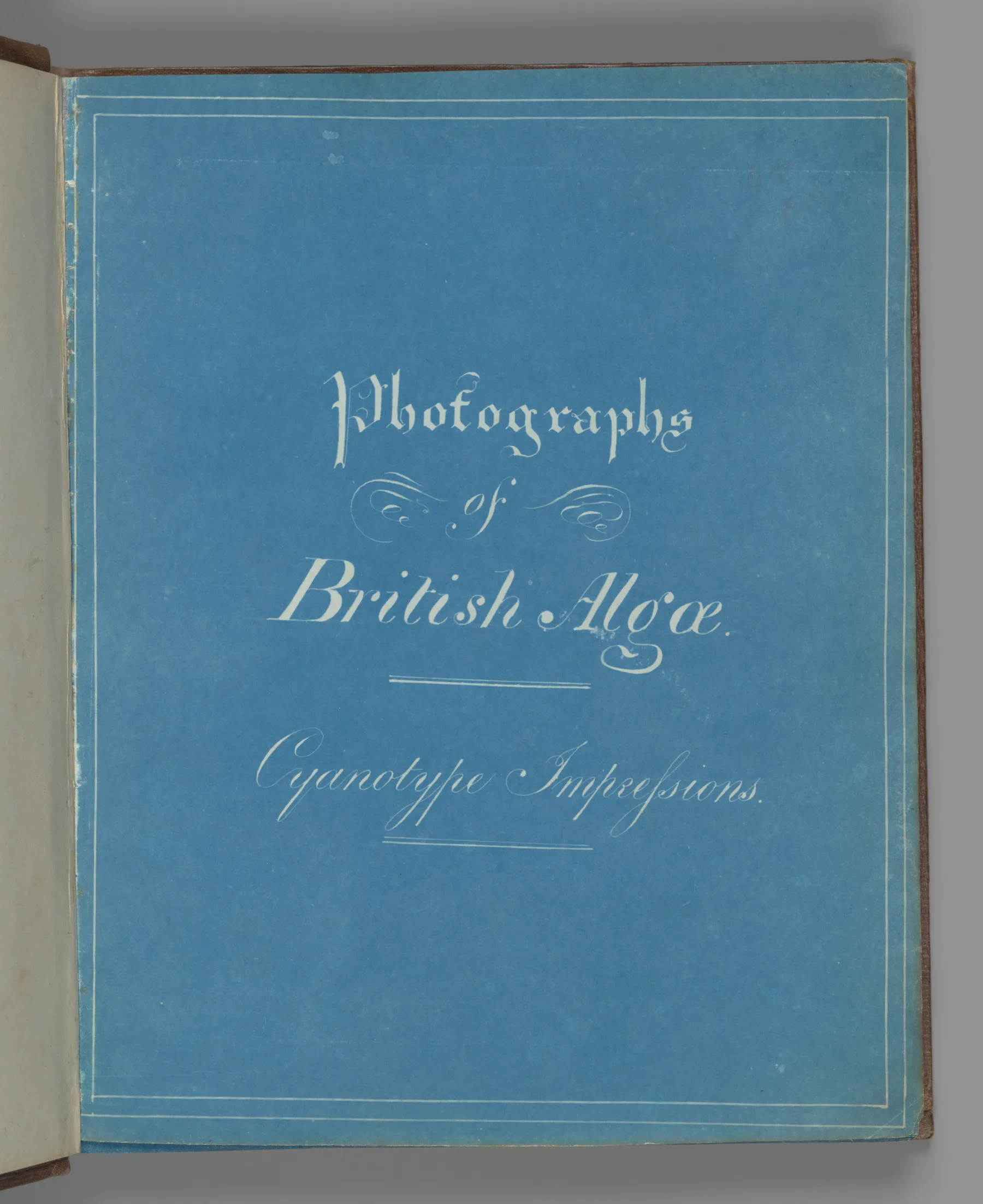
One caution is needed: the archive publishes no image-use licence. Entries carry only a credit in the form "Photos: [name]". Citing from it is therefore possible, but using an image requires writing to the maker. The image accompanying this article comes, for that reason, not from the archive but from an openly licensed collection.
Credits and sources
Source
- Future Materials Bank · 13 March 2026
This piece was written by 2C Magazine from the facts in the source above. No sentences were taken or translated from the source; the commentary is our own.
Image
Illustrative image: Anna Atkins / Metropolitan Museum of Art, New York, NY · Public Domain (CC0)
The image is not the subject’s own photograph; it was chosen from an openly licensed collection to represent the topic. No image from the source publication was copied.
Copyright
Text © 2C Magazine, 2026. You may quote with attribution and a link; republishing in full requires permission.
hello@2cstd.com — notices are actioned within 48 hours.
Comments
Loading comments...